
BALLISTIC
ARMOR PLATES
Uncompromising vital-organ protection. Advanced materials ranging from multilayer UHMWPE to SiC ceramic-composite hard armor plates, engineered for mobility, confidence and high-threat operational use
ARMOR PROTECTION TECHNOLOGIES
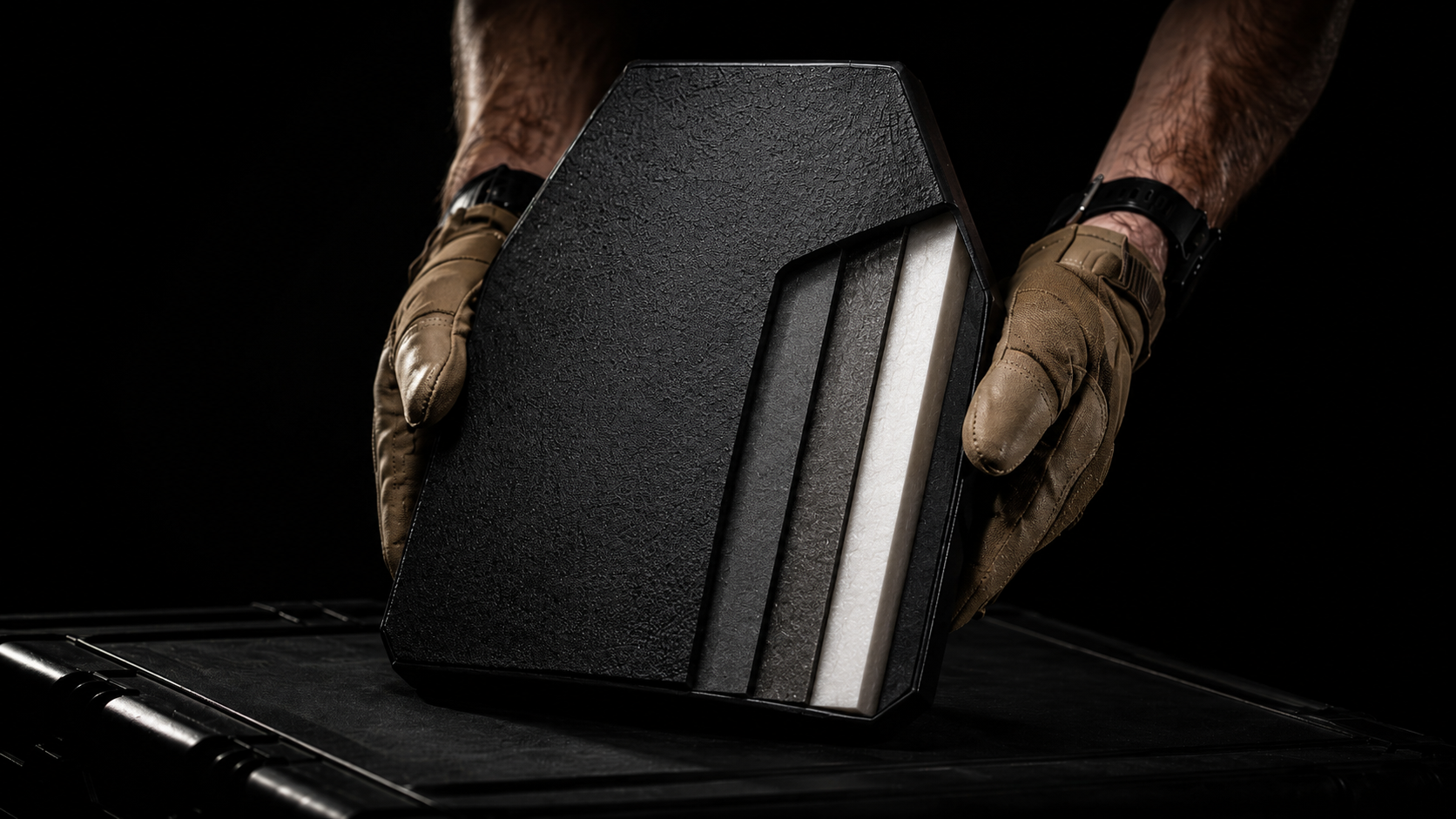
CERAMIC COMPOSITE AND UHMWPE
We offer two primary hard armor panel technologies. The first is ultralight multilayer UHMWPE. The second is ceramic-composite armor combining a silicon carbide SiC strike face with UHMWPE backing to address high-threat rifle and armor-piercing threat profiles
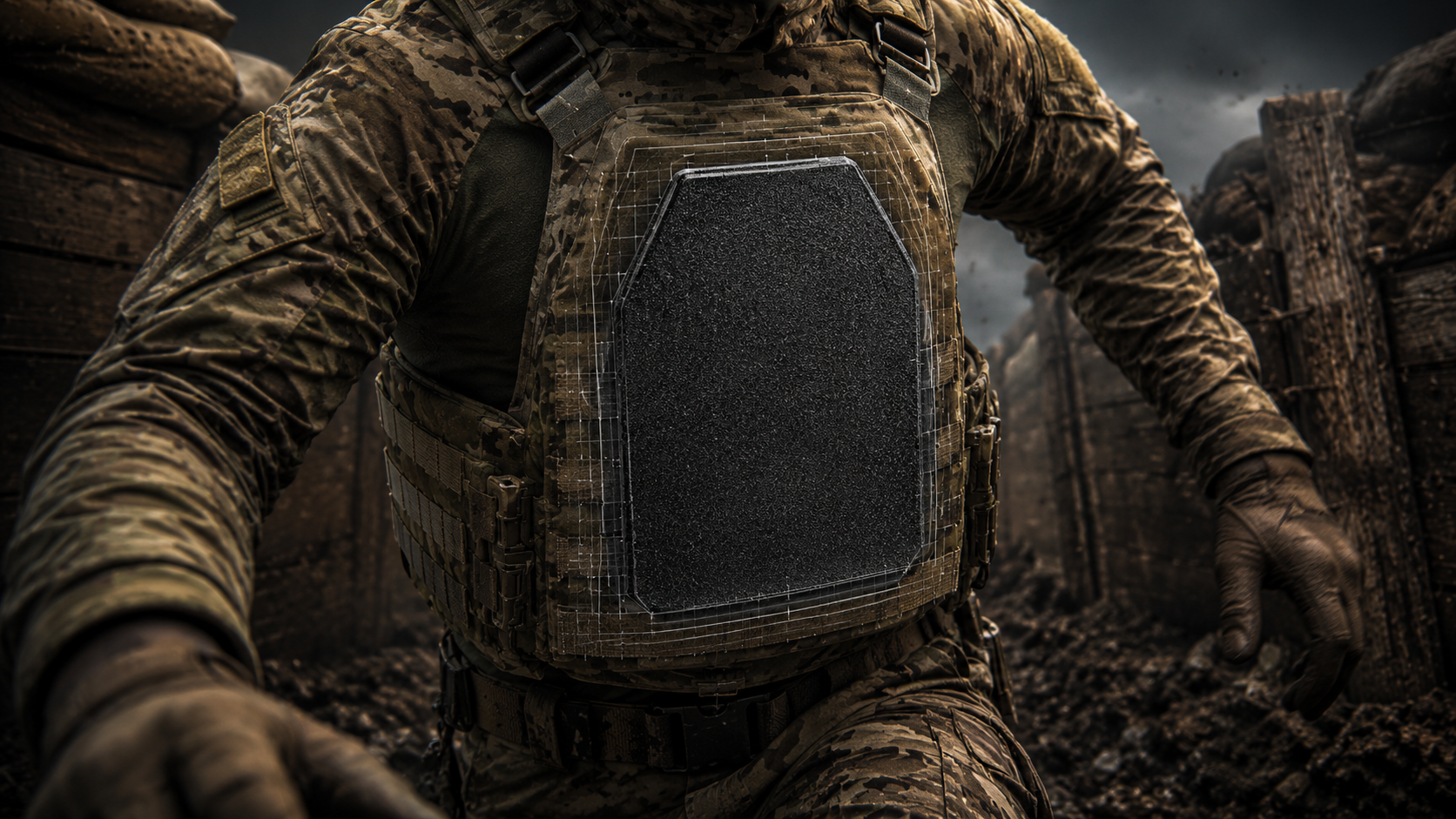
THREAT LEVELS AND WEIGHT ERGONOMICS
The lineup is configured for different operational threat profiles, including NIJ Level III / IV protection packages and STANAG-aligned fragmentation considerations. The lightest UHMWPE plates start from 1.5 kg, while high-threat ceramic panels are available from 2.8 kg to 3.1 kg depending on configuration. All plates use Multi-curve anatomical geometry for stable body fit
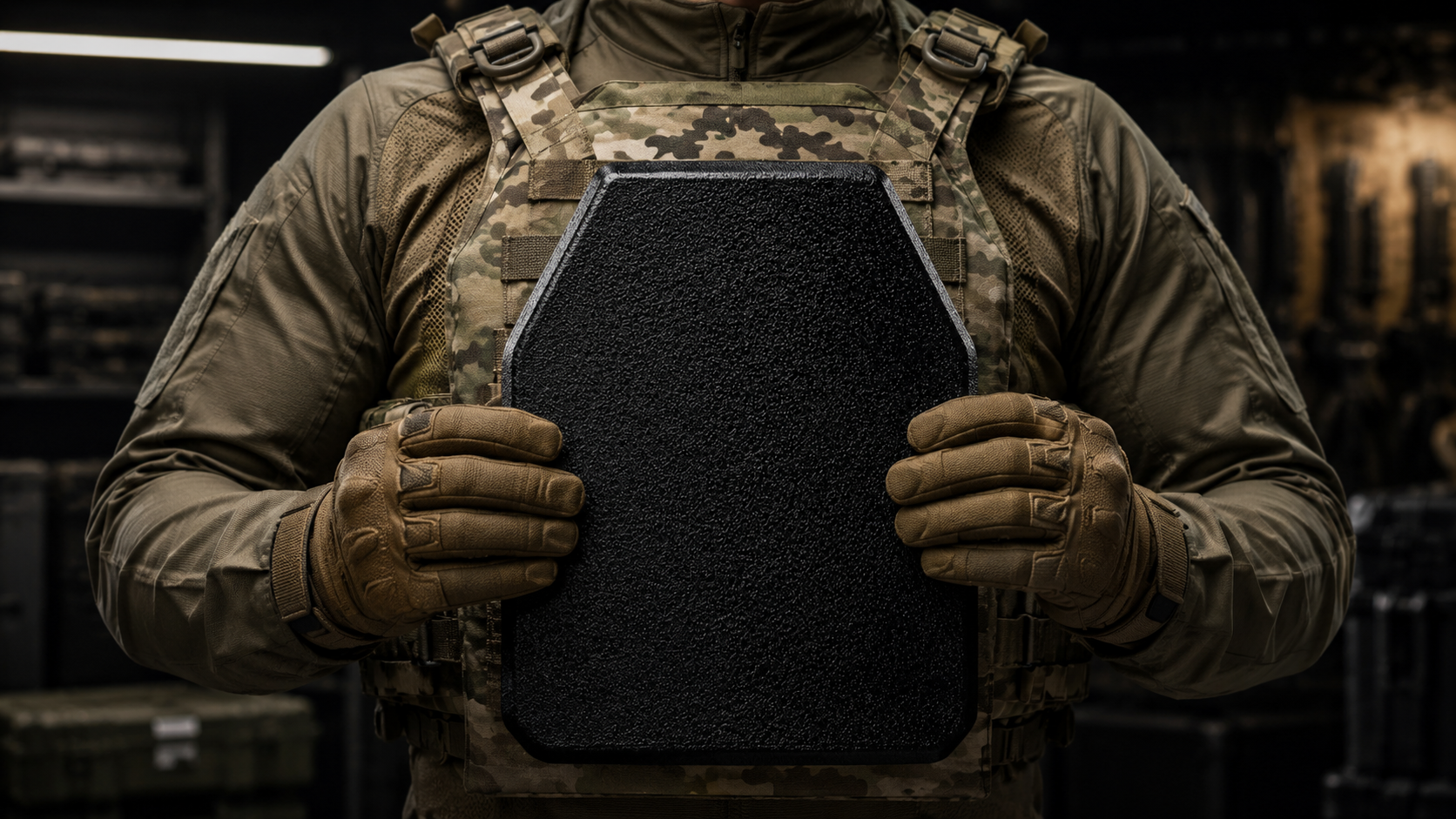
STAND-ALONE (SA) SYSTEMS
Stand-Alone means the armor plate delivers its declared protection level by itself. It does not require an additional soft armor backer underneath. This is the preferred configuration for users running minimalist plate carriers and seeking a reduced overall equipment profile
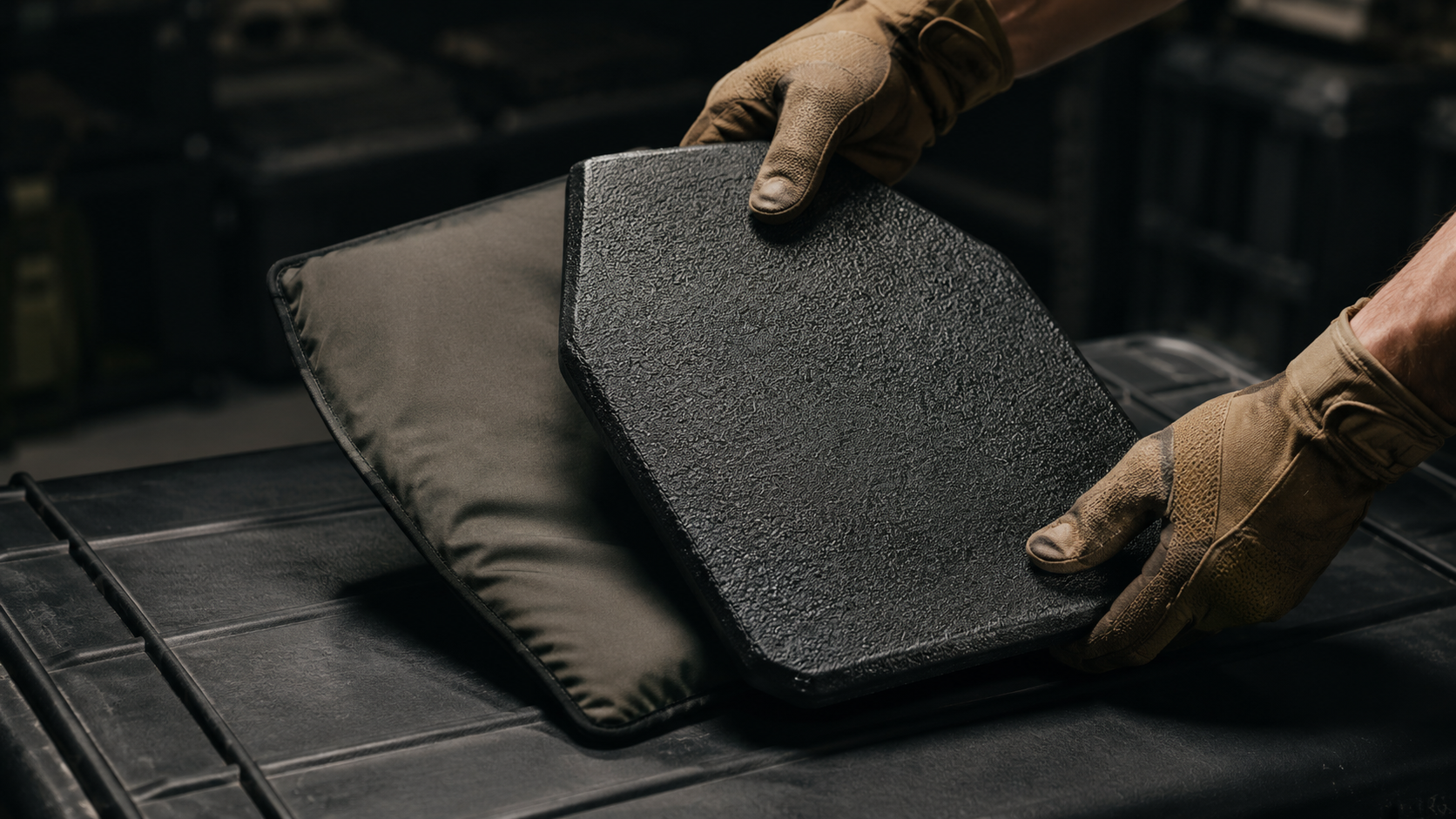
IN CONJUNCTION WITH (ICW)
ICW plates are designed to work only in conjunction with soft armor backing. This approach allows the ceramic panel itself to be lighter. The plate handles the primary kinetic impact, while the soft armor package helps manage backface deformation and provides additional fragmentation protection
LIGHTWEIGHT LINEUP
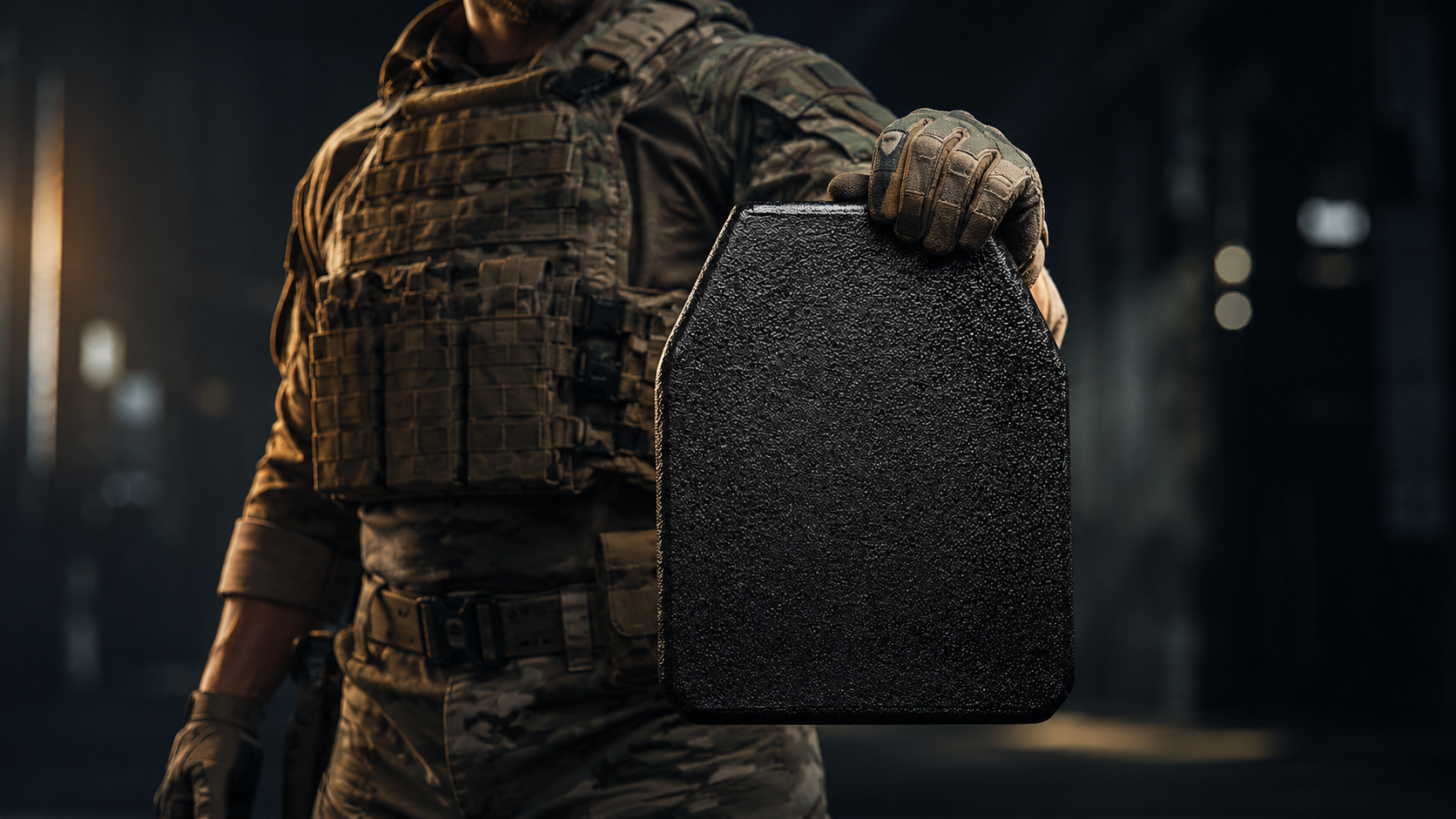
Modern combat operations demand high mobility. That is why we developed dedicated lightweight configurations: from ultralight UHMWPE 1.5 kg plates for NIJ III-class packages to optimized ceramic ICW 2.8 kg configurations for high-threat protection. Even a few hundred grams of weight reduction can significantly reduce fatigue during extended missions
TESTING AND CERTIFICATION
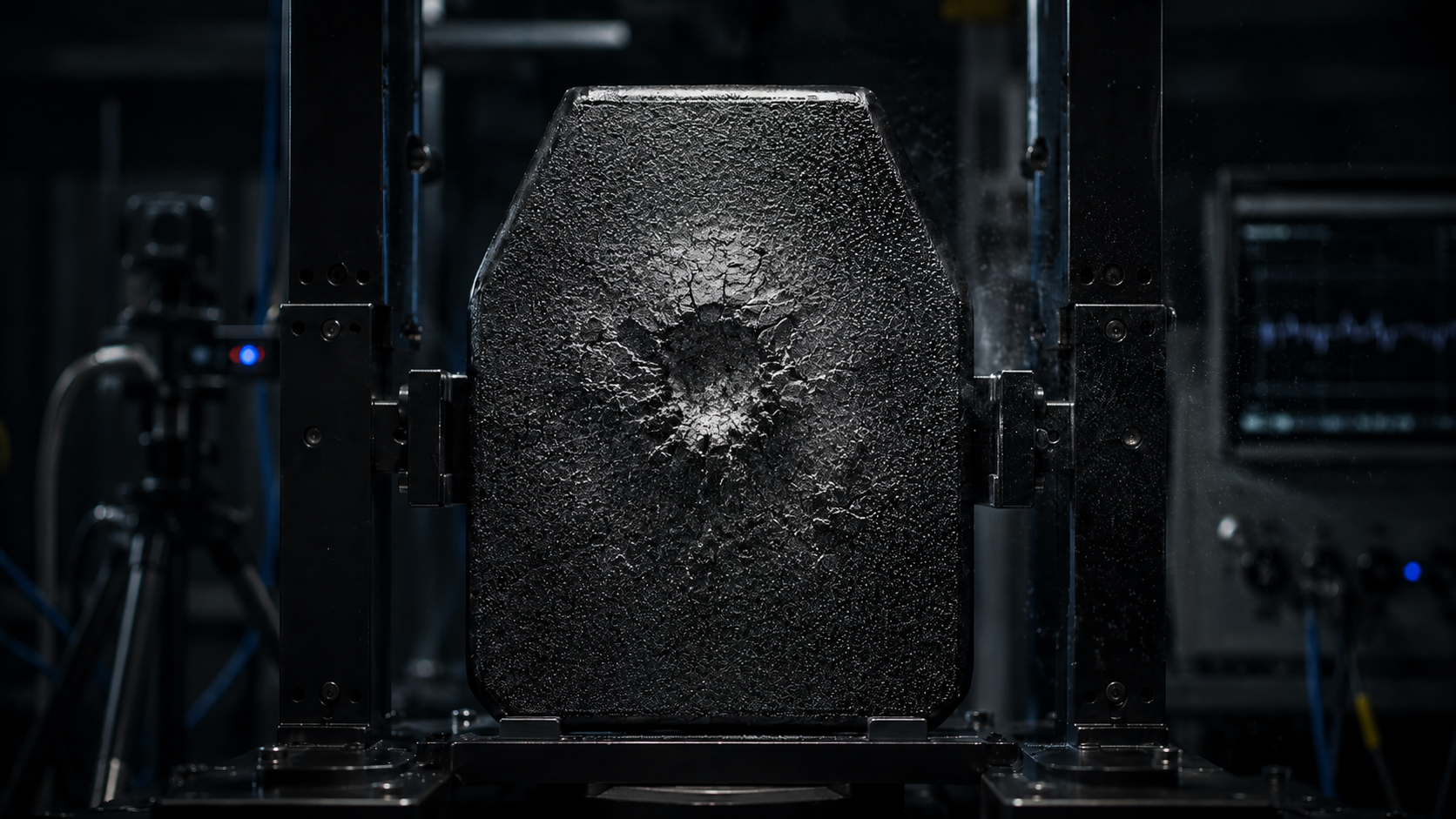
Every production batch is controlled. Plates undergo laboratory ballistic testing to verify resistance against rifle threats and high-velocity fragments in accordance with applicable NIJ and STANAG test logic. Certification confirms that declared performance reflects the real protective capability of the product in operational conditions